For what it’s worth, The State vs. George Zimmerman

scales-of-justice-gavel_4

When called for Jury Duty, most of you complain and contemplate all the reasons why you can’t and don’t want to serve…

This past Spring, I was called for duty and ended up serving a 2-Month Stint  as Juror #3 {the Secretary} on the Fulton County Georgia Grand Jury.

At first, I wasn’t happy about having to serve, but after a week I settled into it and it gave me a whole new perspective on how our Country’s Court System works.

Just so you know:

Fulton County Grand Jury Duty service commitment = 2 days per week for 2 Months, at $25 per day.

My term was every Tuesday and Friday from 8:30am – 5:00pm, during the months of March & April.

For what it’s worth, I have no comment on The State of Florida vs. George Zimmerman Case.

And if I did, I was not a Juror, or an Attorney, nor was I the Judge on the case – so what does my opinion matter?

Argue amongst yourselves.

… But, PLEASE hear me when I say this:

The next time you get called for Jury Duty, Look at it as an Important Opportunity to be a part of YOUR government in action.

TAKE IT SERIOUSLY and DON’T BE A DICK ABOUT IT.

~~~~~~~~~~

According to Wikipedia:

“For What It’s Worth” is a song written by Stephen Stills. It was performed by Buffalo Springfield, recorded on December 5, 1966, and released as a single in January 1967; it was later added to the re-release of their first album, Buffalo Springfield. The single peaked at number seven on the Billboard Hot 100 chart. This song is currently ranked #63 on Rolling Stone‘s list of The 500 Greatest Songs of All Time as well as the eighth best song of 1967 by Acclaimed Music.

The song was inspired by an event at the dawn of the psychedelic era in November 1966, the year during which Buffalo Springfield started playing as the house band at the Whisky a Go Go on the Sunset Strip in Los Angeles. According to the Los Angeles Times,[3] annoyed residents and business owners in the district had encouraged the passage of strict (10:00 p.m.) curfew and loitering laws to reduce the traffic congestion resulting from crowds of young club patrons. This was subsequently perceived by young, local rock and roll music fans as an infringement on their civil rights, and on Saturday, November 12, 1966, fliers were distributed along the Strip inviting people to demonstrate later that day.

Hours before the protest one of L.A’s rock ‘n’ roll radio stations announced there would be a rally at Pandora’s Box, a club at the corner of Sunset Boulevard and Crescent Heights, and cautioned people to tread carefully.[3] The Times reported that as many as 1,000 youthful demonstrators, including such celebrities as Jack Nicholson and Peter Fonda (who was afterward handcuffed by police), erupted in protest against the perceived repressive enforcement of these recently invoked curfew laws.

Though often mistaken for an anti-war song, it was this first of the “Sunset Strip riots” which inspired then Buffalo Springfield band member Stephen Stills to write “For What It’s Worth”, recorded about three weeks after on December 5, 1966.

The song quickly became a well-known protest song. While it has come to symbolize worldwide turbulence and confrontational feelings arising from events during the 1960s (particularly the Vietnam War), Stills recounts writing the song in reaction to escalating unrest between law enforcement and young club-goers on the Sunset Strip in Los Angeles County, California.  The song’s title appears nowhere in its lyrics; it is more easily remembered by the first line of chorus: “Stop, children, what’s that sound?”

Stills said in an interview that the name of the song came about when he presented it to the record company executive Ahmet Ertegun who signed Buffalo Springfield to the Atlantic Records-owned ATCO label. He said: “I have this song here, for what it’s worth, if you want it.” Another producer, Charlie Greene, claims that Stills first said the above sentence to him, but credits Ahmet Ertegun with subtitling the single “Stop, Hey What’s That Sound” so that the song would be more easily recognized.

In 2006, when interviewed on Tom Kent‘s radio show “Into the ’70s”, Stephen Stills pointed out that many people think “For What It’s Worth” is about the Kent State Shootings (1970), despite predating that event by over three years. Neil Young, Stills’ bandmate in both Buffalo Springfield and Crosby, Stills, Nash & Young, would later write Ohio, which really is about Kent State.

The song was played (without Neil Young‘s presence) at Buffalo Springfield’s induction to the Rock and Roll Hall of Fame.
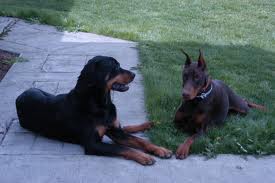
 

The Invisible Fence

dogs

I was bitten by a dog once.

A long time ago.

I turned 13 years old during that summer and lived on a street where a neighbor had a Doberman Pinscher.

This was back in the mid-70’s when Doberman’s were really popular as a guardian and protection breed.

The Smith’s had a beautiful female named Lacy who was tall and majestic and looked like a shiny Pony.

Whenever I walked past the Smith’s house, she would run to the edge of the yard and stop just long enough to sniff me and let me me rub her head.   She was protecting “her territory”.  It was my guess that she was “allowing” me to continue down the street, because she “knew” me.

In July, Lacy gave birth to a litter of 4 puppies. Out of those 4, was one lone male pup whom they decided to keep.  He was the runt of the litter and I don’t think the Smith’s really expected him to survive long.

… But, he fooled everyone and quickly, he grew to almost twice the size of Lacy. Just as any Mother would be, Lacy was very protective of her “little” pup.

For hours on end, I used to sit at my bedroom window and watch Lacy and that male puppy play in the yard.

I noticed that somehow, even though the Smith’s yard was not fenced, Lacy managed to figure out the property limits and she knew just how far the two of them could wander without getting into trouble.  In essence, Lacy had set her own Invisible Fence/Boundary for herself and her pup.

When strangers approached her Boundary line, Lacy would let out a warning bark.  The Bark was meant not only to tell strangers to “Beware of Dog” but also to warn her pup of impending “Danger”.

Everytime her pup got close to the sidewalk or the edge of the driveway,  Lacy would run over and nip him at the back of his hind legs to remind him to “stay close”.

Funny… I thought I “knew” Lacy very well, but apparently, I didn’t.

One Saturday afternoon as I was walking home from the Bowling Alley, I saw Lacy and her pup playing in the front yard.

The Smith’s and their children were no where in sight.

As I approached the yard, Lacy let out her Bark.  I kept walking.  Her pup ran closer.  Finally, as Lacy realized that I was getting “too close”, she ran and cut the distance between me and her pup.  She hurried to nip his hind leg and then {for good measure} turned an bit a chunk out of my thigh.

Before I knew it, I was down and both Lacy and her pup were back sitting on the front step of their house just as though nothing had happened.

****

Many years passed before I realized that THAT experience proved to be a lesson in Boundaries.

Boundaries.

We set limits, guidelines, and rules for how we associate with the world around us. Our friends, families, and aquaintences, even strangers are expected to understand and obey the Boundries that we place around ourselves.

Unfortunately, sometimes our Boundries are not clear to everyone. Nor do they remain in place ~ Often times, we lose sight of the line all together.  The invisible lines – Boundary – that we draw in the sand gets erased, yet we still expect it to be seen and obeyed by the people with whom we come in contact.

Social Media is interesting… Where are the Boundaries?

Many people use Social Media as a way to express themselves and often do so without realizing that they have opened their life for EVERYONE to see.

We say things and portray ourselves in ways that we would never consider if we were not sitting behind a keyboard… Then, when an acquaintance crosses the line or replies with something deemed inappropriate = All Hell Breaks Loose.

We classify a list of 2500+ people as our “friends”, yet we get Mad and/or Angry when they act too friendly.

In today’s world, it is nearly impossible to separate Social Media from True Life.

We can not be one person on our facebook page and another person at work or on our resume. It’s impossible.

Lacy kept sight of her Boundary at all times.  She knew where it was and she protected it against friend and foe.  She made certain that everyone around her knew just where it was, too.

When we blur or erase our own personal Boundaries, how can we expect others to know where the line is drawn?

As defined in Wikipedia:

Personal boundaries – Guidelines, rules or limits that a person creates to identify for him- or herself what are reasonable, safe and permissible ways for other people to behave around him or her and how he or she will respond when someone steps outside those limits.  They are built out of a mix of beliefs, opinions, attitudes, past experiences and social learning.  Personal boundaries define you as an individual, outlining your likes and dislikes, and setting the distances you allow others to approach.  They include physical, mental, psychological and spiritual boundaries, involving beliefs, emotions, intuitions and self-esteem.